
In April 2019, I walked into the BBC News Yoruba studio, prepared to discuss the topic, “Ṣé lóòótọ́ ni pé obìnrin kì í gbárùkù ti ara wọn láwùjọ?” (Is it true that women do not support one another in society?) Of course, the live programme would be aired entirely in Yoruba.
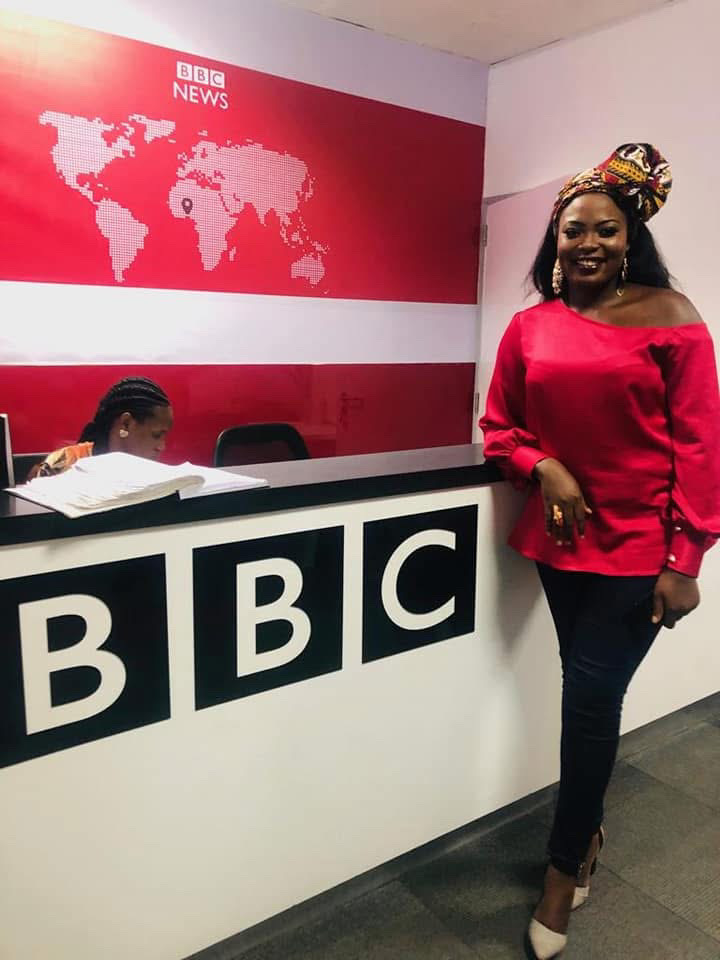
Before that invitation, I had already begun a sensitisation about reclaiming our womanpower, but I did not believe mainstream feminism was our answer.
Although I already held a degree in Linguistics/Yoruba and was working on my first major Yoruba project, I was only just beginning to immerse myself in the philosophies of my own culture. Still, something deep within me knew that Western feminist ideals could never fully translate to African women’s realities. I knew that, at least in Yoruba society, women were not always subjugated. Women once had a voice; they had a place. Yoruba women were heroines—socially relevant, spiritually grounded, and central to the universe’s sustenance. I knew this without having to read it from history books.
Have you ever heard of—or do you believe in—reincarnation?
During that BBC programme, I made an unplanned remark, “Láyé ìgbà tiwa…” (During our time…), but I did not clock it until weeks later when I played the interview for my mother. With her usual teasing humour, she asked, “Ayé ìgbà ẹ̀yin wo?” (During whose time?) Lost on what she was talking about, she added, “Ìgbà wo ni mo bí ẹ tí o ń pé ‘láyé ìgbà tiwa’?” (When did I give birth to you that you are claiming ‘during your time’?) I laughed, but I was convinced that I was qualified to make the remark. When I later shared the moment with my mentor, he smiled and said, “You spoke subconsciously. You are an Old Soul.”
Three years later, that offhand remark began to make sense.
By 2022, my inquiry had evolved. What started as a conversation about women’s solidarity was maturing into a deeper search for what makes womanhood powerful in the first place. I launched a sort-of-campaign on Instagram inspired by my book manuscript Women Seas—a literary play on wo-menses. The project was about rewriting the narrative of menstruation and reintroducing it as a source of sacred power. As I researched, I stumbled on the roots of women’s subjugation. The world (read as “men”) feared what women could do, especially with their blood, and so they erased them from spiritual and social spaces. A-ha! What a discovery!
Curious about the origin of menstruation, I hosted an Instagram Live with two guests: an Ifá priest and a Muslimah. I couldn’t find a Christian participant—those I asked admitted they didn’t know how the Bible explains the origin of menstruation. My understanding, as a former Christian, was that it began as a curse on Eve, but I wasn’t sure.
The IG Live was productive and enlightening. The Ifá priest’s insights that day would mark a turning point for me. He narrated how, when Olódùmarè sent the Òrìṣà to shape the Earth, the male deities excluded Òṣun from their mission because she was a woman. Òṣun, displeased yet silent, used her feminine powers to make their efforts futile. Frustrated, the men went back to Olódùmarè for help. “What of the woman I sent with you?” Olódùmarè queried. “Oh, but she’s only a woman,” they replied. I imagine Olódùmarè laughing at their foolishness before saying, “Include her in all you do.” Only then did creation succeed.
Do you not wonder why this story is seldom told? Your guess is right.
As I navigate my own identity, not as an ordinary woman, but as one awakening to the deeper layers of womanhood—feminine energies and spiritual power, my conviction that we were sold an impractical version of feminism deepens.
In one of my posts, I wrote that African women do not need to fight for rights; we need to remember our powers and wield them.

Indeed, all women are witches, if you can hold that word without flinching. Every (Yoruba) woman possesses the Ìyà mi energy, the sacred current of creation and sustenance. We are Mother Goddesses, the pulse through which the universe breathes. Ìyà mi is neutral: you receive the version that you invoke. Ìyà mi can be benevolent and malevolent, tender or terrifying. That autonomy is our essence and inheritance.
Dear woman, take off the shield of equality and walk into the collective memory. Get acquainted with the silent force that you bear, because the power you seek is not out there; it hums quietly within you. It has been feared, suppressed, misunderstood, but it endures, waiting for you to call it by name.
My journey into the mystery of Àjẹ́ and how they mirror the power every woman carries is still unfolding. This is a quiet call to every woman to step into the Divine and reclaim the Àṣẹ that Olódùmarè placed in her from the beginning of Time.

 The Global Tana
Leave a reply to Rajamani A Cancel reply